
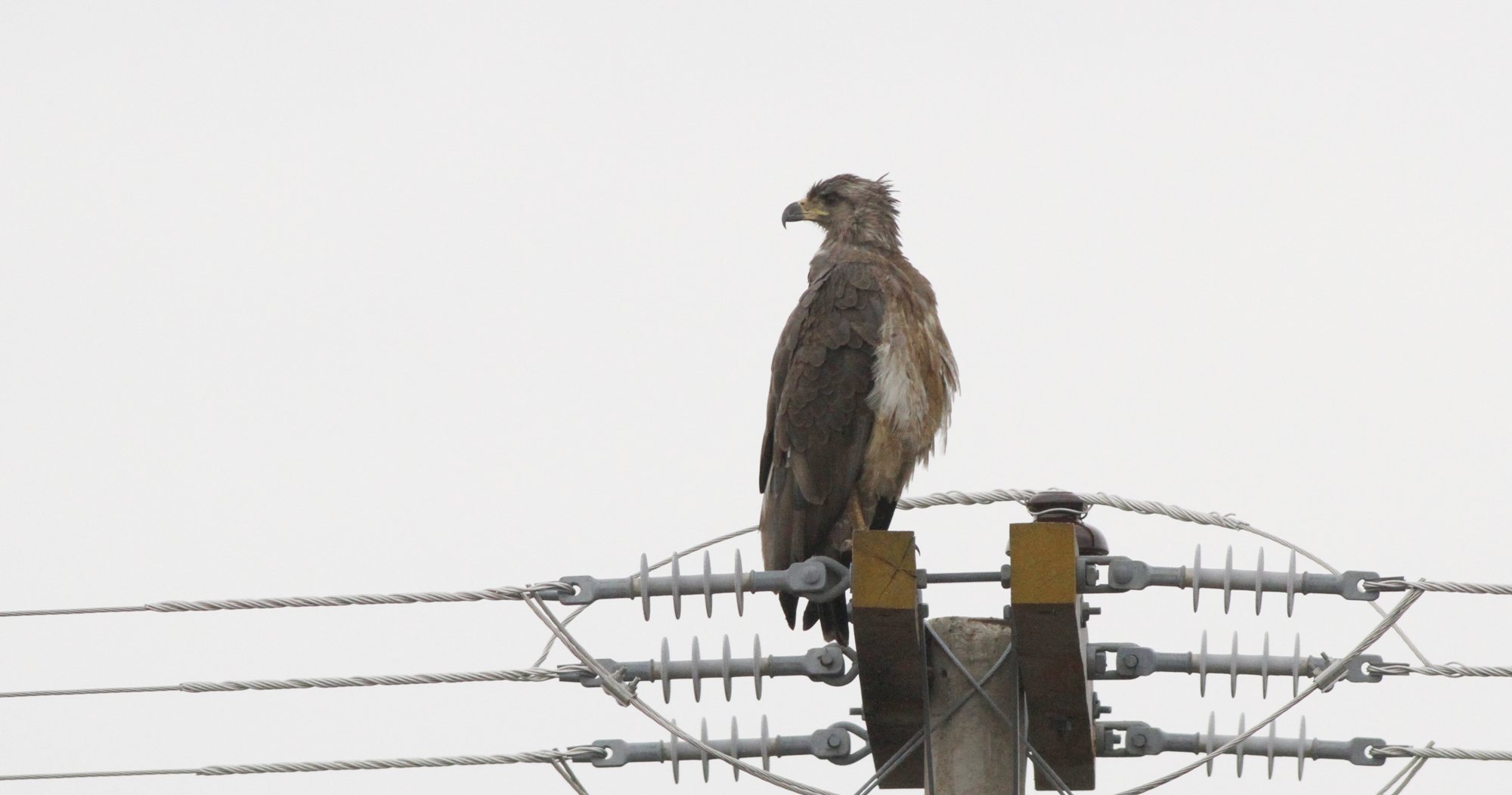
Every poorly designed pole is a trap
For ten years we have surveyed power lines pole by pole to record the birds of prey killed by electrocution and show where and how to prevent it.
Birds of prey use poles as perches
In open country, the pole is the highest point in the landscape. Birds of prey use it to spot prey, rest and sometimes build their nest.
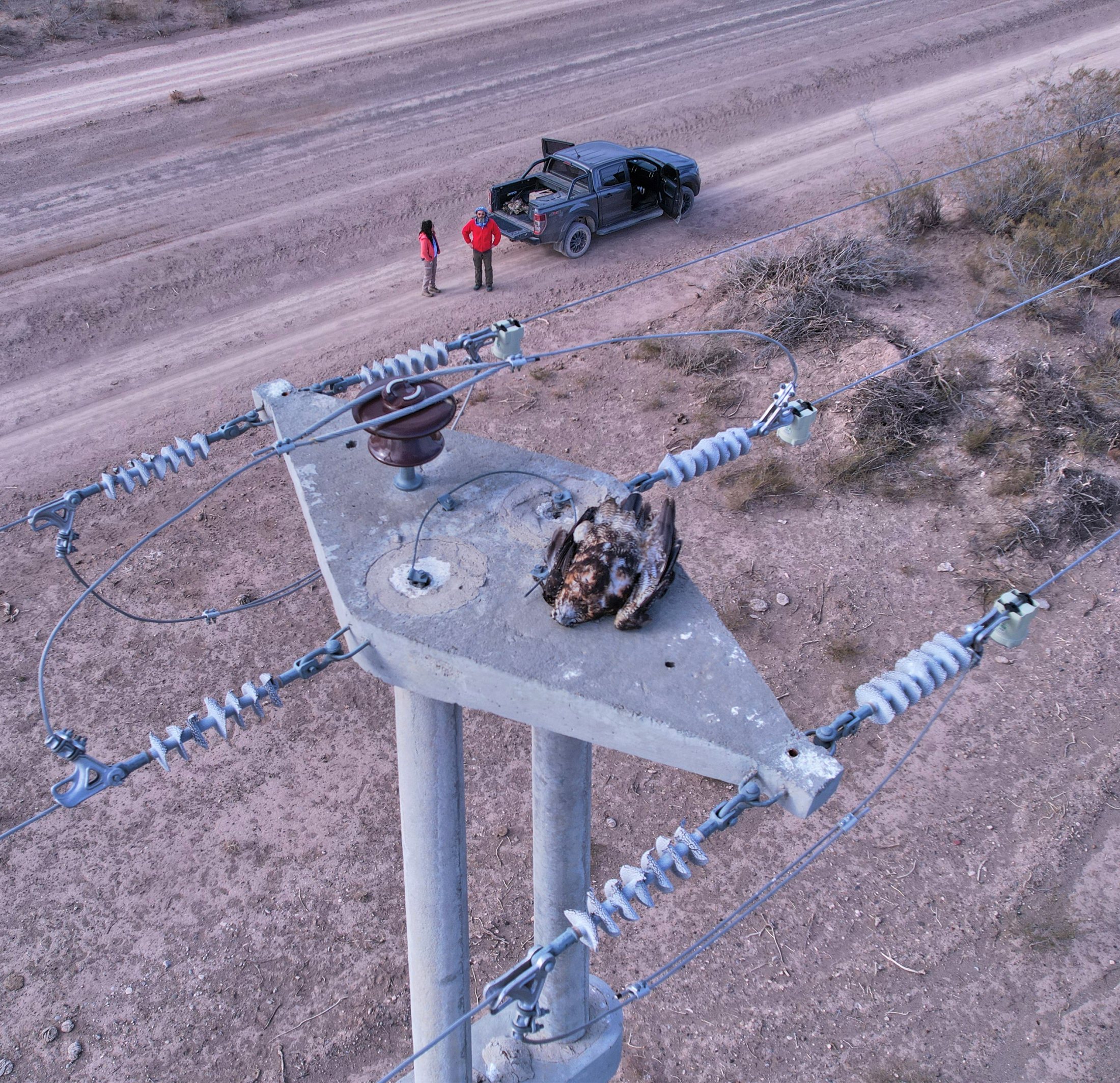
On a well-designed pole this has no consequences. On a poorly designed one, a large bird that spreads its wings can touch two conductors at once, or a conductor and a grounded part, and close the circuit.
The shock is almost always fatal. It mostly affects the species with the largest wingspans, which are also the most threatened.
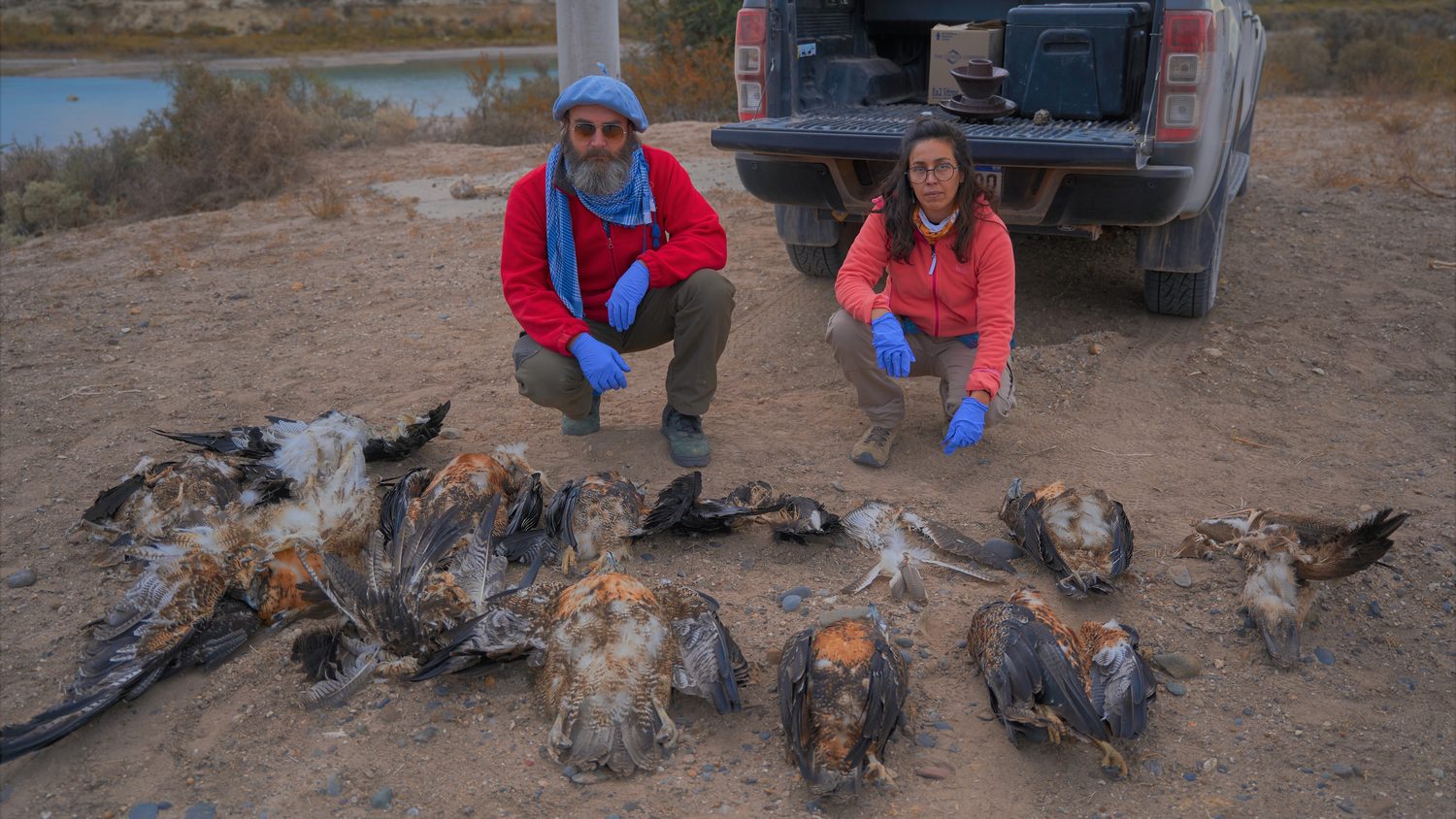
The burn confirms the cause
A bird found dead at the foot of a pole may have died for many reasons. Burn marks on the feet or feathers are what allow us to record it as electrocution.
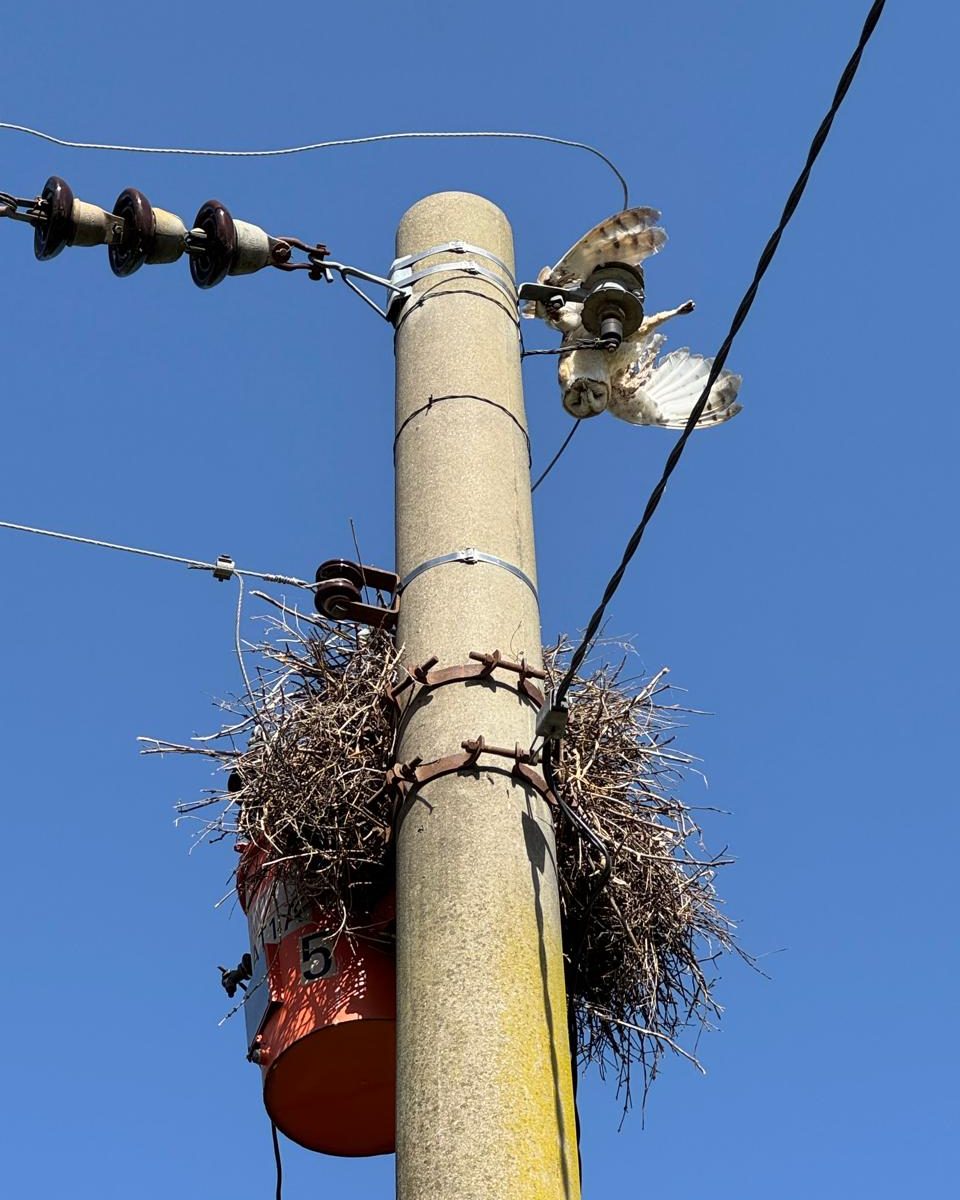
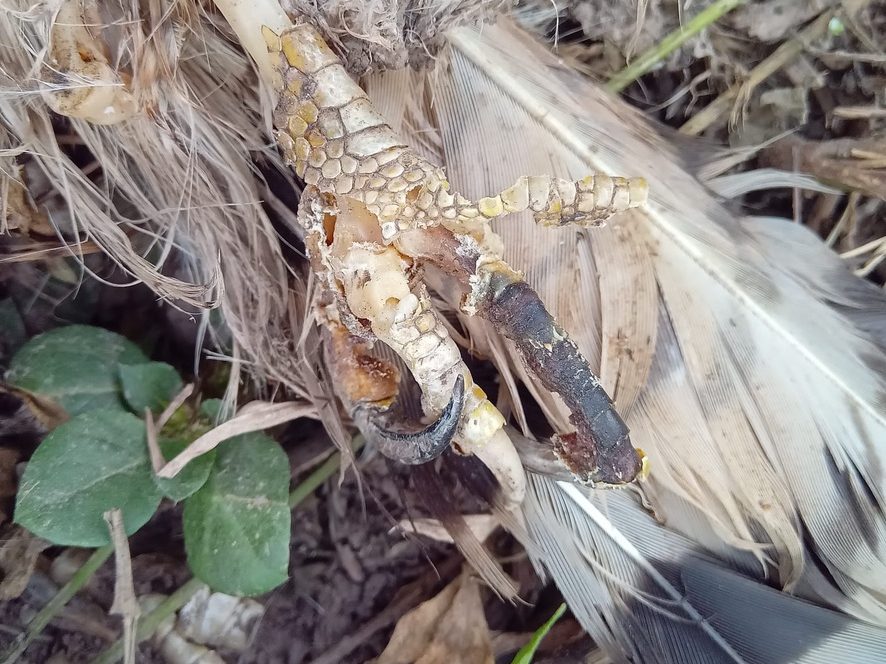
We walk the power lines, pole by pole
At each pole we record bird remains, the type of structure and evidence of electrocution. With these data we identify which designs are dangerous and on which stretches the deaths are concentrated.
In 2026 we published a large-scale assessment of raptor electrocution across the country.
There is a solution
There are proven, low-cost solutions: insulating the conductors near the pole and changing the layout of the crossarms, so that a large bird cannot touch two energised parts when it spreads its wings.
Most cost less than repairing the line after a fault. The electrocution of a large bird causes power cuts and, in rural areas, also fires.
A modified power line stops killing birds the next day. It is one of the few threats to biodiversity that a technical decision can solve.
What we have published on this topic
- A hundred birds or more: large-scale assessment of raptor electrocutions across Argentina Gallego-García, Orozco-Valor, Gómez-Espí, Martínez-Miranzo y Sarasola · Perspectives in Ecology and Conservation · 2026
- Interacciones entre tendidos eléctricos y fauna silvestre en Argentina Sarasola, Martínez-Miranzo y Gallego-García · UICN · 2026
- Electrocution risk for the endangered Crowned Solitary Eagle and other birds in semiarid landscapes of central Argentina Galmes, Sarasola, Grande y Vargas · Bird Conservation International
If you find a dead bird under a power line, let us know
Reporting with SilentSong takes two minutes on your phone and works without signal. Each record helps us locate the poles that need fixing.
How it works